

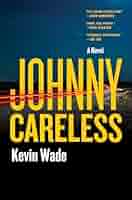
Johnny Careless, Kevin Wade – Interview
A Gripping Debut Crime Thriller from the Acclaimed Screenwriter
Kevin Wade, the screenwriter and producer behind iconic works like Working Girl and Blue Bloods, steps into the world of fiction with his debut novel, Johnny Careless. This fast-paced crime thriller delves into the life of Police Chief Jeep Mullane as he investigates the murder of his childhood friend, Johnny Chambliss. A story that blends elements of crime, action, and psychological drama, Johnny Careless explores themes of loyalty, guilt, and the moral complexities of its characters. Wade’s transition from screenwriting to novel-writing, a feat accomplished during the 2023 Writers and Actors Strike, was no small challenge. Writing from his home office, Wade spent months crafting a story that pushes the boundaries between hero and villain, forcing readers to question the consequences of one’s past. In an insightful interview with Maria E. Simoes for The Strand Magazine, Wade reveals his creative process, his struggles adapting to the novel format, and how his love for crime stories and complex characters shaped the narrative.

Kevin Wade – Interview Questions by Maria Eduarda Tavares Simoes
1. How long did it take you to write this book? Did you have a specific writing routine, such as a time or a place where you would sit down to write it?
I wrote it in about three months during the 2023 Writers and Actors strike. 13 years into a 14 year run writing, I was producing a network TV show and used to deadlines and daily quotas and it was a much harder habit/schedule to break than I would have imagined. I have a home office, part of a detached garage and away from the house and the inhabitants. I wrote it there, four or five hours a day, pretty much every day once I got underway.
2. Your book has a distinctive tone that echoes classic police procedurals and detective stories. What is it about cop stories that particularly inspires you?
In my early twenties, I discovered Hammet, Chandler, John D. McDonald, etc. I’d read Joseph Wambaugh’s LAPD novels as a teenager, as my father bought them all. I liked the stories, the slang, and mostly the way they scanned society from the high life to the lowlifes with muscle and wit.
3. Were there detailed outlines or character arcs you worked with before starting, or did the plot evolve organically as you wrote? How do you balance structure versus spontaneity in your storytelling?
The only things I started with were Johnny and Jeep as haves and have-nots and the way of building their relationship by alternating past and present. I also knew the time frame was about a week (in the present) and going back to their teenaged years in the past. I’d read somewhere that Elmore Leonard didn’t outline but let the characters lead his plotting. After almost 40 years of outline-heavy screenwriting that sounded like an entertaining challenge.
4. What were some of the biggest challenges you faced while writing this book? How did you overcome them?
The amount of words. Screen and teleplays are mostly dialogue, with some slugged in descriptions of time, setting, and characters present. I haven’t done a word count, but it’s a fraction of a novel’s count.
It was only when I realized that I was doing all the jobs of my usual collaborators (casting, locations, wardrobe, shots, editing, hair, makeup, music, art direction, etc) that I relaxed some. I’m no pro at any of those disciplines but I’ve been in close business with some great ones.
5. How do you keep readers guessing? Are there specific techniques you used to build suspense and misdirection?
Screen and teleplays require you to make sure the audience does not get ahead of your story, else you bore or lose them entirely. I tried to stay a step ahead, without leaving them feeling cheated or swindled.
6. The landscape of Long Island, with its beaches, coastal towns, and close-knit communities, seems to have a strong presence throughout the novel. How did you use this setting to amplify the tension or reflect the inner conflicts of the characters? Do you think the story could have taken place anywhere else, or is the setting integral to the mystery and its themes?
I’ve always admired and immensely enjoyed how the great ones use locale as an integral character; Chandler and Connelly’s Los Angeles, McDonald and Hiaasen’s Florida, Parker and Lehane’s Boston.
I’ve lived on the North Shore of Long Island for 24 years and so was a) familiar with the geography, classes and customs and b) could easily see that the upstairs/downstairs, haves and have nots strivers and scurriers that helped drive The Great Gatsby was a dynamic that was alive and well today.
7. Was the ending of the book something you envisioned from the beginning, or did it emerge during the writing process? How do you navigate the balance between knowing where a story is going and allowing it to unfold naturally?
I had no idea those two strands (Johnny’s son, the car thieves) could intersect until about halfway through. It came as a great relief to me and I hope an enjoyable twist for the reader.
8. As an author, you must spend a lot of time with your characters, both good and bad. Were there moments when you found yourself truly frustrated or even dislikin’ any of them? Is there a character you had a particularly hard time sympathizing with, even as you wrote them?
All of my writing life (plays, movies, tv) has been employed in creating characters for actors to portray. I’m in the necessary habit of trying to make sure there is some dimension, relatability and playability baked into any character I make up. I’m trying, not always succeeding, but that’s the job I’ve had for a long time.
9. The language in the book seems to echo the tone of police dramas, sometimes feeling coded or cryptic. Was this a deliberate stylistic choice? Can you talk about your use of language in the book?
I love slang and vernacular and broken sentences as a heightened way of getting across how people talk. Plus, adding muscle in and a little mustard on the language can be entertaining in even the sad or romantic parts.
10. Despite his proximity to John Chambliss, Jeep is a character that, throughout the story, feels like he doesn’t truly belong with his group of friends from the Long Island Coast. Does the fact that he doesn’t identify with the morals of his peers make him a more reliable narrator, or does it challenge the reader’s trust in his perspective?
My hope would be that the reader feels he stands on the outside looking in, as I do, and I assume most readers do, in real life. I trust skeptics, personally, and Jeep’s meant to be as reliable and as trustworthy as they come.
11. “Johnny Careless” shares thematic elements with F. Scott Fitzgerald’s The Great Gatsby, particularly in its exploration of money, power, and privilege. Was this influence intentional? Both books tackle themes of wealth and the lengths people will go to protect their social standing. How much of this was inspired by The Great Gatsby?
Answered slightly above. That book is the light on the dock across the water for me. I did not try to imitate or ape any of it, but I was aware of it leaning over my shoulder most days. In the very last paragraph, I kind of tipped my hat.
12. Class and social status seem to be recurring themes, especially in how money plays a role in escaping consequences. Could you elaborate on the role of class criticism in your book?
I hope it’s more portrayal than criticism. As I said before, most of us feel like we’ve got our nose pressed to some windowpane where life is better on the other side of the glass. I don’t know where it comes from but it’s been with me since I wrote the movie Working Girl back in the last century. Probably too cold a case to figure out now.
13. Laila was a character that I was particularly fond of. Although she appears in the story as a form of lesson to the main character, Jeep, she is nuanced and well constructed. Was she inspired by anyone you know in real life? How did you come up with the idea of her and her side plot?
Some made from some real people, some made up. I wanted the reader to see Jeep independent of Johnny and home, and I wanted to test him in The Big City and have him wounded.
14. The theme of father-son relationships runs deeply through the novel, from Jeep’s reflections on the lessons he learned from his own father to Johnny Chambliss’ ultimate sacrifice for his son. How do you see this dynamic influencing the characters’ decisions and motivations?
A lot of guys I know, present company included, spend some of their early and middle adult years trying NOT to become their fathers and, later, have some baby-with-the-bathwater regrets. In Jeep’s case, his relatively pure and simple respect and affection for his father seems almost aspirational, and so helps draw him as a “hero”, I hope.
15. After all the twists and turns, what is the message or takeaway you hope readers are left with when they reach the final page of Johnny Careless?
Honestly? That they enjoyed it for what it was and maybe pass it on to a like-minded friend.
Author Profile:
Kevin Wade is a seasoned screenwriter and producer, best known for his work on iconic television shows such as Blue Bloods, Working Girl, and Meet Joe Black. With decades of experience in crafting compelling narratives, Wade makes his literary debut with Johnny Careless, a gripping crime thriller that blends action, psychological drama, and character-driven storytelling. Wade’s transition from screenwriting to novel-writing comes after years of building a reputation in Hollywood for his sharp eye for human complexities. When he’s not writing, Wade enjoys the quiet life on the North Shore of Long Island. Johnny Careless marks the first foray into fiction for the veteran creator, demonstrating his knack for crafting suspenseful, multi-layered stories.
PUBLICATION INFORMATION
TITLE: Johnny Careless
AUTHOR: Kevin Wade
GENRE: Fiction/Crime Thriller
PUBLICATION DATE: January 28th, 2025
PUBLISHER: Celadon Books
FORMATS: Hardcover, e-book, and audio
HARDCOVER PRICE: $27.99
HARDCOVER ISBN: 1250355109