

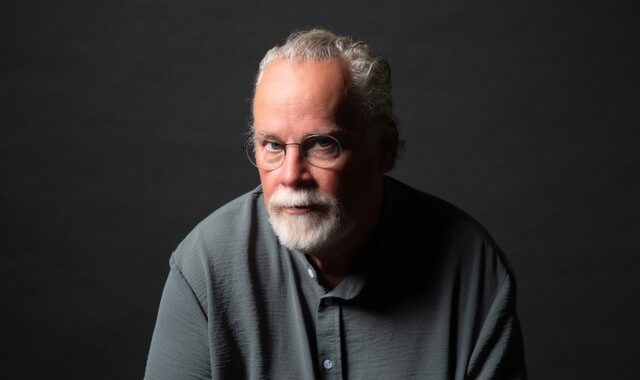
When The Black Echo was published in 1992, it emerged without the usual fanfare that accompanies a major debut. Yet even before the novel quietly won the Edgar Award for Best First Novel, crime-fiction critics sensed something different. Here was a writer whose prose straddled the line between classic noir and straight-up literature.
At the center of it all was Harry Bosch—not a cardboard tough guy or burnout detective, but a fully realized character: bruised, principled, obsessive, and shaped by a city where hope and disappointment live side by side. Los Angeles became a central character of its own in the Bosch novels, a landscape Connelly rendered with a reporter’s precision and a novelist’s lyricism. Was Bosch a fitting heir to Philip Marlowe? Was Connelly the author to carry Raymond Chandler’s mantle into the next century?
With each successive novel, the answers to these questions became clear. A steadily growing circle of readers and reviewers realized Connelly wasn’t a one-hit wonder. By 2005, his name had reached the top of the New York Times Best Sellers list, and from there his career went from strength to strength, as he expanded the Bosch universe with new figures like Mickey Haller and Renée Ballard while continuing to develop early-series characters such as Jack McEvoy.
Yet the engine beneath Connelly’s novels has never been storytelling or characters alone, but his grounding in journalism. Long before he wrote fiction full-time, he spent more than a decade on the crime beat, living among detectives, cold cases, unsolved murders, and the strange logic of human violence. After all these years, his fiction still carries the immediacy of a midnight ride-along.
It didn’t take long for Hollywood to notice. The Lincoln Lawyer was adapted into a 2011 feature film starring Matthew McConaughey. And 2014 saw the launch of Bosch, an Amazon Studios series starring Titus Welliver, which ran for seven seasons and has led to two spinoffs—Bosch: Legacy and the police procedural Ballard, which debuted in summer 2025 and stars Maggie Q.
Over the years, in addition to winning the Edgar for Best First Novel, Connelly has received many of the major honors in crime fiction, including the CWA Diamond Dagger, the Strand Critics Award for Best Novel (twice), and the Mystery Writers of America Grand Master Award.
Connelly recently introduced yet another series character in Nightshade (2025): LA County Sheriff’s Detective Stilwell, stationed on windswept Catalina Island, off the beaten path of mainland Los Angeles. Michael Connelly’s latest novel, The Proving Ground, was released by Little Brown and Company this fall.
Andrew Gulli: Your latest book is called The Proving Ground and it’s another in the Mickey Haller series. Tell us more about it.
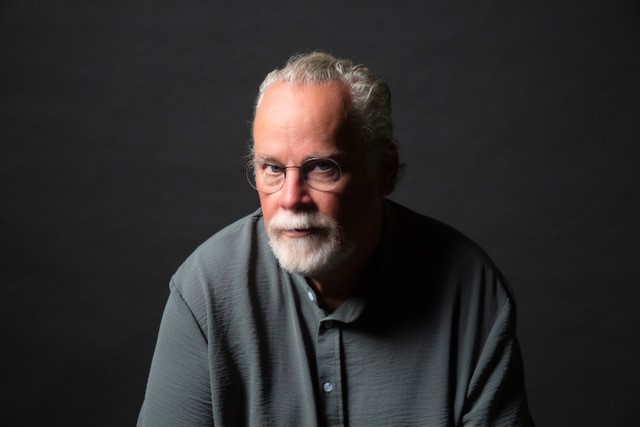
Michael Connelly: It was inspired by a couple of true things that happened in the AI world. A few years back, a kid climbed over the wall at Windsor Castle with a crossbow, and he was going to try to shoot the Queen. Of course, he was tackled right away by security, and when they looked into what was motivating this, it turned out he was encouraged to do it by his AI chatbot. And then last year, there was a super sad story where a kid in Orlando committed suicide, and when his parents were trying to figure out how, they found he had had a long-term relationship with a chatbot, and the chatbot encouraged him to kill himself so they could be together in eternity. That spawned a lawsuit. I got a copy of that lawsuit, and it was very detailed. It also included about 60 pages of the conversation between this kid—I think he was 14—and his chatbot. And when I read that lawsuit, I just knew I wanted to write something similar . . . I’d fictionalize it and make my own story, but that’s what it was about.
So it’s a legal thriller where Mickey Haller has turned a page and has left criminal defense and is now in civil litigation and bills himself as a public interest lawyer. And I thought this was a perfect case for that because AI is engulfing us on all levels. Most of them are fantastic advances, like in medicine and communications and so forth. But it’s pretty much an unregulated world at the moment, and so things like this can happen where a 14-year-old is [swayed] by basically a robot that’s been programmed by much older people. It was just a perfect story for me to write at this time.
AFG: Have you looked into ChatGPT yourself?
MC: No, I haven’t. And one reason why is I’m one of the authors in the class-action lawsuits where our work was taken without permission and used to train ChatGPT, so I didn’t want to be going down that path of using AI while I’m suing AI. So no, I haven’t knowingly used it in any way. I think every time you go on the internet, or you go on your phone, you’re probably using it in some dimension.
AFG: Tell us also about Nightshade, because it’s a bit of a departure from your other works. I like that it had some of John D. MacDonald’s influence, which I found great because I’m a big fan of John D. MacDonald as well.
MC: Yeah. I actually worked as a teenager at the Bahia Mar, which is where The Busted Flush was docked in the books. In the Travis McGee books, he often mentioned people at the marina, and they were real people I knew. So I really was into John D. MacDonald at that point in my life. And you know, part of the process that led me to wanting to be a writer was reading his books as well as others. So yeah, the milieu is very reminiscent of John D.
AFG: Of all the great noir authors, who do you feel speaks most to your spirit? I know you’re kind of a noir scholar, so how would you rank them?
MC: I would put Chandler at the top of that, but it’s hard to pick one. I think I have a Big Three and it’s Chandler, Wambaugh, and Ross Macdonald. And they all wrote about LA or Southern California, and different generations. Those three really had the most impact on me in terms of inspiration.
AFG: What are your favorite books by each of those authors?
MC: Well, they’re probably unpopular picks, because everyone thinks of, like, The Big Sleep and stuff, but The Little Sister has a chapter in it that is actually not really plot-driven: Marlowe is frustrated so he takes a drive around LA and the description and many of his famous similes are in there. I read that the most of all of his books and I’ve read the chapter too many times to count. Literally dozens and dozens of times. So Little Sister for Chandler. For Wambaugh, The Black Marble.
AFG: Black Marble, okay, that’s from left field. [laughs]
MC: Probably all these will be from left field. But The Black Marble was, I think, his most atmospheric book. And it really got into the noble cause of being a detective and what can happen if you see too much or things get under your skin emotionally. So I thought that was a great book.
I’m picking ones that are favorites, but I like all their works. So, Ross Macdonald—that would be tough. It’s probably The Underground Man because I think that was the first of his books that I read. Oftentimes—I mean, I get that myself—people’s favorite of my books is usually the first one they read. And I think it’s because it has the element of, “Oh, wow, I discovered somebody I want to keep reading.” I think that imprints, and so often it’s the first book you read that becomes your favorite.
For the full interview here’s a link to purchase issue 77 of Strand