

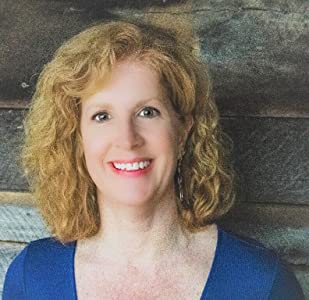
Interview with Susan Ouellette
By Anna Shura
May 19, 2021
(We are proud to present this exclusive interview with Susan Ouellette.)
When Susan Ouellette was growing up, she dreamed of becoming a detective like her childhood literary idol, Nancy Drew, or even taking on a career as a spy. Most people don’t come close to their childhood career dreams, but Susan Ouellette worked for the CIA as an analyst covering the Soviet Union. In our interview, she discusses her career experiences and the star of her books, Maggie Jenkins.
Maggie Jenkins works as an intelligence analyst trying to clear her husband’s name in The Wayward Spy. This book is the product of 20 years of persistent writing, and Susan Ouellette is excited to finish the second Maggie Jenkins book, due out on March 15, 2022. Ouellette sets Maggie Jenkins’ adventures in the early 2000s and reveals, “I think Maggie has a lot to do.” More Jenkins books are to come as Ouellette pulls on her experiences and interests in writing subsequent novels.
Throughout the interview, Ouellette shares personal stories about her time working for the CIA. She reveals how she stored away details she learned on the job to incorporate into future novels. From coming down a secret Capitol staircase and running into a worldwide celebrity to celebrating with co-workers in a known KGB hangout, Susan Ouellette has had an incredible career.
Away from writing, Ouellette has a reading and travel list. She describes her all-time favorite book and where she hopes to travel post-pandemic.
AS
First of all, could you tell us about your latest novel?
SO
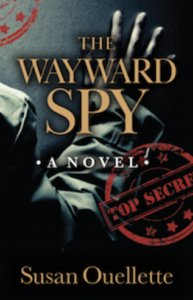
Sure. I published The Wayward Spy on March 3 of this year. It’s my first novel in a series of novels. It’s a spy thriller about a woman named Maggie Jenkins, whose fiancé is murdered overseas. That happens right at the beginning, so no spoiler. She feels like she’s getting the runaround from official Washington, DC. There are allegations made about her fiancé, and she decides she’s the only one she can trust. So, she sets off to figure out what really happened to her fiancé. In the process, she uncovers a terrorist threat against the United States, corruption among American officials, and runs into the Russian mafia, Chechen terrorists, and other assorted bad guys.
AS
So, you know, nothing going on at all? In learning a little bit about your background, I found that you had some very interesting careers. Could you talk through your previous career experiences?
SO
Sure. I worked for the CIA as an intelligence analyst when I was in college and graduate school. I was there at a pretty exciting time; it was when the Soviet Union was collapsing. That had been my focus of studies in college and graduate school, so it was pretty exciting to be there on the front lines virtually. After the CIA, I went to work on Capitol Hill for the House of Representatives Intelligence Oversight Committee. That was a fantastic job being on that committee gave me much more insight into the entire intelligence community and even into what the CIA was doing.
When you’re working at the agency, you’re sort of in your little bubble, and you’re walled off from a lot more. But when you work for a committee that has oversight of all these activities, you get to see a lot more. So, for me, somebody who always loves spy stories, it was exciting. That’s actually when I first started thinking of writing a book. Part of my job was to handle budget issues for various intelligence agencies, and that was the boring part of my job. And so, my mind would wander. I’d think, what if I had a character kind of like me who had the CIA background, worked on Capitol Hill, and there was a scandal and intrigue and murder? I just kind of tucked that away in the back of my brain, and I didn’t start writing until 2001. So, this book has been 20 years in the making. I started writing it, came close to publishing it a few times, and quit multiple times because I didn’t get published. And then I met a woman at a writers’ symposium in California, and she’s also an author. She is a freelance editor, and she convinced me to let her take a look at my book. And we revised it, and here I am.
AS
That’s incredible. What’s your writing style like? Are you someone who lays it all out in an outline? Or do you just kind of run with an idea?
SO
I run with an idea. I usually know what happens, and I can see the opening scene. I have a second book too. We can discuss it after. I can see the opening scene, and I know how it ends. The vast middle, I just plunge in and see what happens. I’ve tried to outline, and it’s extremely painful. I thought it stifled my creativity. I’m a little envious of writers who can outline it because it seems like a less tumultuous process. I just can’t get that outline down.
AS
That’s fair enough. All right. Well, like you said, you have a second book. Would you like to tell us about that?
SO
Sure. So, I’m currently working on edits with my editor, and that book is due out on March 15, 2022. So, it is a sequel to The Wayward Spy. We’re working on the title. Right now, it’s Reluctant Martyr, but that’ll probably change. We pick up where the first book leaves off with Maggie again and several of the characters who survived the first story. She’s back at the agency, and she isn’t satisfied necessarily with the way things ended in the previous story with her fiancé and who was responsible for it. So, she sets out again to try to initially get some revenge on some guilty parties. But she comes around a bit and makes it less about her and more about securing some innocence from another impending attack.
AS
Maggie is somewhat familiar to your own career. How similar or different are you to Maggie Jenkins?
SO
Well, we both have a CIA analyst background. And we both worked for the House Intelligence Committee. And that’s my experience. They’ve informed this setting and what her daily life was like. So, it’s very realistic in that aspect of it. But I never went running off overseas to try to track down the bad guys myself. So, that’s where we diverge. But as far as the politics and the structures of the organizations, those are accurate, at least at the time they were in the setting. The book takes place in 2003.
AS
Okay, got it. So, you’re drawing upon your CIA background here. Is there anything that you experienced when you were working there that you’d like to include in a future novel?
SO
Yeah, there were a couple of things that I’ve held in reserve. They just didn’t quite fit in with either of the first two books. I was overseas on an official sort of fact-finding mission, a couple of us from the House Intelligence Committee, and we got to hang out with the CIA station chief in this one particular country. And I learned a lot that I didn’t know. What he pointed out to us was disturbing, I’ll have to include in a future book how a foreign adversary was surveilling school buses that the American kids went on to their American school. It’s things like that. Just little details. A couple of other personal experiences of running into officials and semi-famous people.
When I worked in the Capitol Building, there was this one staircase from the House Intelligence Committee tucked up in the attic of the Capitol. It’s kind of hard to find, and I think that’s intentional. But there’s this back staircase that I go down to get to the cafeteria and come around the corner. And I ran into the Dalai Lama, which was kind of crazy. He just kind of bowed his head, and he had a security entourage. And I was like, “That was the Dalai Lama!” It was pretty cool. So, things like that I’d like to put into future books.
AS
Wow, for sure. Those are exactly the details that you can’t quite believe are real. I know you mentioned you’re just starting to get into series writing. How is your writing mindset shifted for that?
SO
I think Maggie has a lot to do. The first book ends. I think it’s a satisfying ending, but Maggie’s not satisfied. The reader will be satisfied but still want to find out what happens next. There’s just a lot more that she can do in her career. The second book takes place the next year after the first one, and it’s in 2004. It begins with a terrorist seizure at a Russian school at Beslan. When that happened in real life, it hit a nerve for me because my children were young. It stuck with me, and it ended up being the opening scene of the book. So that set me on this path and brought together some elements from the first book, some unsolved questions from the first book, and Maggie kind of runs with it and takes it from there. And I, I just write it.
There is a third book. At this point, I’m so focused on the second book I don’t know what happens. I’m starting to get ideas, and they start to pop into my head. So the process is both deliberate and that weird, creative, “you don’t know where it comes from” process. You just get an idea. And you say, “Oh, yeah, that’s what happens next.” So, it will be based on a real-life event, but then the fiction takes over from there.
AS
Are there any current political or national issues that you’d like to write about in the future?
SO
There’s so much, really, so much. I haven’t thought about writing about any of the wars. In Iraq, Afghanistan, I mean. I think there are people who, that’s their wheelhouse, some of these former Navy SEALs who are now into writing fiction. But it’s a possibility. I’m more interested in what drives the individual bad guys. They’re never all completely bad people. There are reasons for what they do. It doesn’t mean it’s acceptable, but I like to explore what drives an individual, not necessarily a movement. So, I can see myself focusing on a particular single terrorist kind of thing that Maggie is up against and making that a more personal battle. It remains to be seen, but there’s so much. I mean, if the second book in 2004, gosh, I’ve got 17 years is worth of history that I can work with since then.
AS
For sure. That is interesting to see all sides of the bad guy. As a writer, you get to see a little bit more of what makes them tick. What do you do to try to get into that headspace and try to offer some perspective on the bad guy?
SO
When I first started writing, I followed the advice of writing books to write out the main characters’ histories, and I did that. I didn’t have to do it for the second book because some of the bad guys are the same without giving anything away from the first book. I think I would do that again like a biographical outline and then almost like a psychological profile. So, for instance, I have a character who lost most of her family members to violence, and that explains a lot of what motivates her and drives her. That’s how I try to get into the heads of these people. It’s also, of course, I can make them do whatever I want, but I want them to be realistic. One thing that the CIA does is analyze the motivations of foreign leaders and foreign actors, and although I didn’t work in that specific group when I was at the agency, everything they put out I read. I thought it was fascinating to try to figure out what makes you know this leader tick and that militant act the way he does, so I guess it’s just something that has always fascinated me.
AS
Are there any other people that you talk to in the CIA? Or just reports that you’d like to pay attention to? What’s good writing fodder?
SO
I’m a news junkie, for sure. I did have one of my former bosses read through my book. He called out a couple of little things like, you don’t call this x, you call it z. You just to have that reality check that most readers may not know, but there’s always those few who are like, “No, you’re wrong.” I am a research junkie; I always have been. I’m working on the edits for the second book, and I think I put in a yield sign in England when the character was in a car. I was like, “Wait a minute, do they actually call it a yield sign?” Then, I go off on a 20-minute research tangent, learning all about traffic signs in foreign countries. So, I love that part. It does kind of derail me from writing, but I want it to be as authentic as possible.
AS
That makes sense. I think writers might have some very strange search history. Are there any wild tangents like that you’ve been on, and you stop yourself and think, where am I going with this? What am I looking at here?
SO
Yeah, the first book, I’d written it so long ago, and my editor, she looked up the US Embassy in the country of Georgia. I had it all described, and she said, “I just looked this embassy up, and it’s like a concrete monstrosity. It’s not this beautiful, old building.” And I said, “Helga, I research everything to death. I’m 99% sure that I got this accurate for 2003.” So, then I spent about an hour and a half digging into State Department documents online to make sure that I got it right. They did move the embassy about two years later. And then I remembered that I had written that scene because I worked with somebody at the CIA who had been over in Georgia and had described the embassy to me. So, these are the tangents I go on. I have to have everything right has to be accurate, but there are imagined scenes as well. I have a scene in a cathedral in Tbilisi, Georgia, and Maggie’s running around and like the catacombs underneath it. I’m not sure if they have catacombs, but it made such a good theme that I was like, that’s okay.
AS
Okay, that’s very cool. Have you gone to many of the sites that you mentioned in the books? I know that you have some work around the DC area, and Maggie does as well. Do you often go to sites to kind of see firsthand?
SO
Yeah, all of the DC area stuff is realistic, like where I put Maggie living. I know where that is. It’s not exact, but I can picture it. I used to live near there and drove by there. All of the Capitol Hill scenes and the CIA scenes are as accurate as my memory will allow. I have not been to Russia. I have not been to Georgia. These are on my bucket list. In the second book, there are some scenes in London, and I’ve been to London. So yeah, anything stateside. You know, I’m not sending her to Nebraska. I’ve never been to Nebraska. So, it’s all places that I’m familiar with to one degree or another.
AS
Okay, that makes sense. If you enjoy travel, which it seems like you do, where are you looking to go once the whole pandemic is at an end?
SO
Good question. Everywhere. We were hoping to go to Portugal, of all places, last year, and that didn’t happen. I have to go to Russia someday. I just have to. But yeah, in places where, you know, you’re not quite sure about the health care. I think it can wait a bit. I’d love to do a river cruise through, you know, Hungary and all of that.
AS
That sounds fantastic. I agree with just about anywhere. Well, in the meantime, what’s on your reading list?
SO
So I’m trying to make a practice of reading my publisher’s books, their newest releases. I started this book called Revisionist Future. It’s about it’s cool because it’s Cold War, but it’s modern. This kind of washed-up writer picks up an old typewriter, hoping it will help him get through his book. He’s not getting anywhere on his laptop. And it turns out that it’s an old Cold War Time Machine. It’s a really fun book. So I love that, and I’m also reading another book called The Taxidermist’s Lover. It’s super creepy. It’s sort of a slow burn horror book. It’s so beautifully written. But I can’t read it late at night. If I have some time on Saturday, I’ll pick it up and read some of it. I can read the Revisionist Feature at night. It doesn’t scare me.
AS
Sometimes, books have to be a nice sunny afternoon read. All right. Who are some of your favorite authors, then?
SO
For thrillers, I cut my teeth on Tom Clancy, way back in the day before he became a very techno-thriller. Descriptions of weapon systems, I would just glaze over, but I loved Patriot Games and The Hunt for Red October. That’s when I was like, “Okay, I love thrillers.” I read a lot of Vince Flynn’s books, probably most of them. I love Nelson DeMille. Robert Ludlum, Robert Mattel, I have some of his books on my shelf behind me, The Company. He’s written a whole bunch of CIA spy books. But my favorite book of the last few years is A Gentleman in Moscow. It’s fantastic. It’s so beautifully written. It’s just a gorgeous book. So, it’s not a spy book. Just a book about the 1920 to 1940 life of a former aristocrat in Russia. It’s just a great book.
AS
I know, growing up, you said you always kind of dreamed of being a spy. There’s probably some literary influence there. What was your favorite book growing up?
SO
Well, I started with Nancy Drew. I read every single one of them at least twice. I just read them till I outgrew them. And then I moved to Agatha Christie, and I like mysteries. But something was missing. They’re fantastic, but something was missing. So, when I discovered thrillers, I was like, “This is it.” I want the mysteries. I like to try to figure out who did it. But the thrillers would keep me up. Keep me reading and turning pages. So, as a kid, I guess it would be Carolyn Keene’s Nancy Drew.
AS
All right. Well, here at The Strand, we’re pretty big Sherlock Holmes fans. And Sherlock classically has this deerstalker hat. What would be your defining detective accessory?
SO
Oh, that’s a good question. Well, this year, it’s been a mask because I can hide myself. But that’s not really a good answer. Gosh, well, I think I still have this in my car. I don’t even know if it’s up to date anymore. But when we worked at the CIA, they gave us a booklet of all of the diplomatic license plates. They always started with two letters and then had numbers so that you would know if you were being followed or something. I guess it came from the State Department. And they did ask us, this is back when there was mass Russian concern, but if you saw one of these license plates outside of a certain area, they could travel under diplomatic cover, which gave them immunity from law enforcement, you were supposed to notify the CIA or the State Department. So that was the thing I always had. Anytime people came to visit me in the DC area, or even if I was just driving around, I’d see a license plate, and I pulled the thing out. So that was sort of my little spy detective accessory: this book of diplomatic license plates.
AS
That’s cool. Did you ever find anyone, not necessarily suspicious, but did you ever see any cool diplomats?
SO
Yeah, I got to meet a couple of officials after the Soviet Union collapsed, like the President of Kazakhstan. …He had these KGB bodyguards, who are these big Russian guys. And he was a little bewildered being in the United States because he had grown up in communism in the Soviet Union. The Russian leaders didn’t let these Republican leaders out to travel and meet a lot of foreigners. But my favorite story is, when I first was in orientation at the CIA, they told us all, “Don’t go to this restaurant or that one, but especially this one. Because if you do, be careful. It’s a KGB Hangout like the Soviet spies go there for drinks and do all this. So, our office’s first happy hour was at that restaurant. The whole time I was, my head was on a swivel, trying to figure out, “Are any of these people KGB spies?” Nobody tried to recruit me. It was all harmless. But it was it was kind of fun.
AS
Always the possibility.
SO
That’s right.
AS
Again, thank you for meeting with me. I’ve learned so much about the CIA from this. Just to remind readers, when is your next book coming out? And what can they look to see from you in the future?
SO
March 15, 2022, the second book will be out. Once we have the formal title, I’ll put that on my Facebook and social media and my website. And then, I will just hit the floor running when my edits are done in August and try to get this third book out within early 2023. That’s the plan.
AS
Awesome. We are looking forward to it. Thank you again!
For more interviews, click here!