

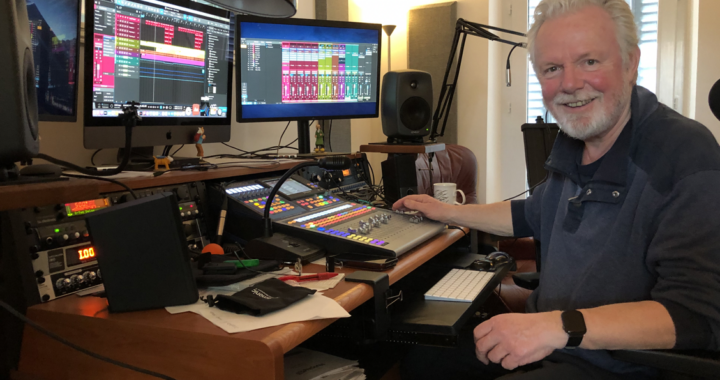
Interview with Peter May
In this exclusive interview, we sit down with Peter May on the launch day of The Black Loch, his latest crime novel and a highly anticipated follow-up to The Lewis Trilogy. Known for his intricate plots and the brooding, evocative landscapes that shape his stories, May shares insights into his new book, a journey back to the Outer Hebrides set twelve years after the trilogy that captivated audiences worldwide.
May’s path to literary success wasn’t straightforward. When The Black House, the first novel in The Lewis Trilogy, was initially rejected by every publisher in the UK, a French publisher’s passion for the book turned it into a bestseller and launched May’s career as a prominent crime writer. Reflecting on his prolific career, spanning 31 novels, he describes his attachment to The Lewis Man, influenced by his father’s battle with dementia, and Entry Island, which channels his fascination with history and the human toll of the Highland Clearances.
May’s commitment to research drives each story, whether exploring the intricacies of crime in the Outer Hebrides or understanding far-flung locales like China and Canada. He combines his journalistic rigor with a deep love for travel, creating stories where setting and culture breathe as integral characters.
Whether you’re new to Peter May or a dedicated reader, this interview promises a unique look into the motivations, memories, and moments that have defined one of crime fiction’s modern masters.
TSM – I’m very excited to talk to you about your new novel, The Black Loch, that came out today, right?
PM – Yes, that’s right, it came out today. This is publication day, yep.
TSM – Congratulations for that!
PM – Thank you!
TSM – I understand that it follows on from the Lewis Trilogy, is that right?
PM – Yes, it’s a kind of sequel to The Lewis Trilogy, 12 years later.
TSM – Could you give us an overview of the series?
PM – The trilogy was set in the Outer Hebrides of Scotland, and the first book, The Black House, was originally published in the UK anyway in 2011, although it was first published in France in French in 2009 because when I originally wrote The Black House, which was I think in 2004, I couldn’t get a publisher for it in the UK. It got turned down by every publishing house in Britain, and it wasn’t until four years later that my French publisher read it, loved it, and bought world rights for it, which is kind of unheard of for a French publisher to buy a world rights for a book written in English. They acquired world rights, had it translated, published it in France, where it became a huge bestseller, started winning all sorts of awards. They then took the manuscript to the big book fair in Frankfurt and, like everybody bought it. Publishers go into bidding wars for it, and you know it was crazy, and then just about the last people to buy it were the Brits! But you know, the publisher that did buy it eventually, Quercus, hadn’t been around in that capacity when I was first offering the book, and they turned it into a big bestseller in the UK. I was persuaded to write another two books to make to make it trilogy. The main character is called Fin Macleod in the first book, The Black House, he’s a serving police officer in Edinburgh who’s just suffered a family tragedy – someone who’s been killed in a hit-and-run accident, so he’s dealing with that at the point where he gets sent up to the Outer Hebrides which is where he comes from originally but hasn’t been back for 18 years. He’s sent out there to help with the investigation of a murder, which is almost identical to one that he’s been investigating in Edinburgh, but for him, returning to the island is pretty traumatic for reasons that unpack themselves during the course of the book. So the book itself is a sequence of third person narrative of the present-day murder inquiry and 1st person flashbacks to his life until he left the island aged 18, and the two come together in the end. There’s a resolution of the murder investigation. It’s more of a novel than anything else, but it is still within the crime scene, and the other two books follow on from that basically, although he leaves the police and he’s no longer a police officer in the subsequent two books.
TSM – That’s really interesting, that sounds great. And you’ve written a lot – 31 books now, which is amazing. Which of the books that you’ve written do you think is your favourite if you had to choose?
PM – Oh, that’s a tough one, but people ask me this. For lots of sentimental reasons, The Black House comes very high up that list ’cause that was my breakthrough book – eventually – although I couldn’t get it published at first, and certainly at the time, I thought it was the best thing I’ve ever written. But the second book in the series, The Lewis Man, has very, very emotional ties for me because one of the main characters in it is an elderly man suffering from dementia. It was very much based on my experiences with my own father, who suffered from dementia, and I looked after him in the last years of his life, so that book has a special attachment for me. The other one I would say is Entry Island, which is the book that I wrote just after the trilogy. It was kind of a ground breaker for me because I was writing about a subject that I felt quite passionate about, which is the Highland Clearances which were land clearances in the 18th and 19th centuries when a new breed of landlords came in and forcibly removed people from their homes, their villages, their houses and put them onto ships sailing to The New World and in conditions that were worse even than the boats that the African slaves were carried to the other side Atlantic on and somehow I wanted to write about that. It was a very interesting historical event, and it was quite difficult because I’m a crime writer. So I kind of married it to a current-day crime investigation in Canada, in Quebec, in fact, in the Les Îles-de-la-Madeleine in the Gulf of Saint Lawrence and, in particular an island called Entry island, which exists. So I was then doing a kind of present-day narrative and historical narrative, but with a gap of 150 years, so it was quite tricky to do, but it it worked in the end, I think, and I the book won a lot of awards. It won Scottish Crime Book of the Year and the ITV Dagger for Readers’ Choice and various other things, so it was a very important book for me as well.
TSM – A lot of research and detail has gone into all of your books. What type of research do you do when you’re writing your books, and how long does that process take?
PM – I do a lot of research. I write about subjects that interest and motivate me to write. I don’t necessarily know enough a lot about them, but they’re things that I then want to go and investigate, so I usually spend three or four months deep in research on most subjects. I mean, I’ve covered things like genetic food modification, organ harvesting, the disappearance of bees threatening the environment, and in my latest book, obviously the problems with pollution and maltreatment of fish in the big salmon farming conglomerates. All of these things require a lot of detailed research, and I had a career in the 70s as a journalist for eight years, and those were years in which I most definitely learned how to search things and never to be afraid to pick up the phone and ask for somebody’s help. So the whole research process is something I enjoy a lot, and it also informs the story as you’re developing it and helps shape it in many ways
TSM – The different settings of your books are really interesting. Could you tell us a bit more about that?
PM – Again, I was interested in travel, as a subject matter. I was interested in places, so my first series of books was set in China. I wrote six books known as The China Thrillers and I spent about 7-8 years traveling backwards and forwards on regular basis to China, researching those books and, in particular, the Chinese police and justice system, which was challenging but very rewarding and great fun. I’ve written books set in the Outer Hebrides of Scotland – I spent five months a year for five years living there when I was producing a TV series in the Gaelic language. I have another series, which is set in France – I live in France, but it’s set all over France, so that was fun for me to go and explore parts of my adopted country that you know I would never otherwise have seen and the United States, Canada – places that interest me and places I felt I needed to go to, to do my research. The sense of place in my books is very, very important to me it’s always like one of the main characters in the book, and because a place will very much influence the mood of the book, the weather, the people, the culture. I never write about places I haven’t been to so I always try and convey to readers exactly what I experienced when I went there myself.
TSM – Yeah, that’s a great approach because, as you were saying, the environment always comes through as a reader, so it must be valuable to have experience of those environments. What are some of the other inspirations behind your writing, like other authors or genres?
PM – Oh well, I mean, you know, when I was a lot younger, I just read all the time. I was never without a book in my hand, and I had lots of writers that I enjoyed reading enormously and who influenced my work I would say primary influences would be writers like Graham Greene and Ernest Hemmingway – people like that. I mean, it’s hard to say that there was a particular favourite, but certainly those writers. A writer called J. P. Donleavy wrote a book called The Beastly Beatitudes of Balthazar B, which was a fantastic read and very much influenced my writing style. When I was young, I didn’t have the particular ambition to be a crime writer. I just wanted to be a novelist, and I kind of drifted into crime writing by accident, but I find it a genre that is very, very good because it’s a great vehicle for writing about any subject. You’re always writing about the human condition when you’re writing about crime, and so that’s what you know in any good story is always about the human condition as well, so regardless of what the motivation or motivating subject matter might have been, at the end of the day it always boils down to people – their frailties and foibles and their relationships
TSM –What sort of advice would you give to young authors or just writers trying to get into the crime genre?
PM – It is tough – it’s tough to get published ’cause there’s a huge amount of competition out there. Although, in a sense, it’s also easier today because self-publication is much easier. When I was young, the only way to self-publication was called vanity publishing. It cost a fortune and was not a good idea – you would never really sell anything – but now it’s really quite easy to self-publish online or even in hard copy, and a lot of writers who weren’t able to get published through conventional sources found that they were able to publish themselves and be successful and ultimately taken up by conventional publishers. So that’s one avenue always to consider. If you believe in yourself, self-publication is a route you can go down; it doesn’t have to be expensive. In general, the thing is you just can’t give up ’cause you’re gonna get knocked back, you’re gonna get disappointed, you’re gonna have your self-confidence dented. You have to stay strong, and you have to just keep writing, and I would say to young aspiring writers, the important thing is to just write. Do it, just write ’cause people give up, and you know you can’t afford to do that if you really want to write – do it!
TSM – That’s really inspirational, thank you for that. You’re currently on a UK tour as part of the launch of The Black Loch right now, aren’t you?
PM – Yes.
TSM – Amazing. Could you tell us a little bit more about what you’ll be doing?
PM – Well, I’m in London at the moment, I live in France, but I came over last weekend and I’m here at the moment doing lots of media print interviews or radio TV. I’m doing Sky News tomorrow morning live at about 8:45am, and then we travel up to Scotland for the Bloody Scotland crime writing festival in Stirling. I’m headlining there on Saturday night, and then I’m doing an event every single day in different places. The next day, I’m in a place called Strathblane, which is near Glasgow, to do an event at Scotland’s only community library, which is something that got funded and built by the local community, and I thought that was worth doing. Then I’m in Glasgow on the Monday, Perth on the Tuesday, Inverness on the Wednesday, Stornoway on the Thursday, and Edinburgh on the Friday, so it’s really full on, a lot of travelling. Different hotel every night, different events every night. Most of them are sold out now I think Bloody Scotland is close to 500 at the moment. We’re sold out in Stornoway, so there’s a lot of interest, and the books are very popular in Scotland. For me, it’s always fun to go back because it’s where I came from, but it’s hard work.
For more interviews, click here!