

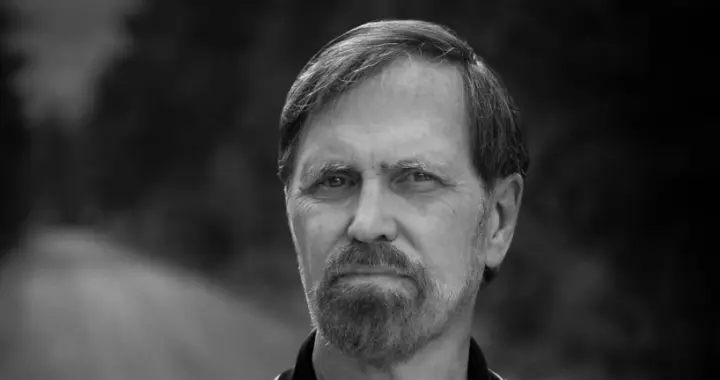
Interview with Elliott Light
The Strand was given the opportunity to interview Elliott Light regarding his new novel, Throwaways, and his experience in writing mysteries and thrillers in general. You will surely find his responses engaging and compelling!
TSM: What do you find the most exciting about the mystery genre? Are there any other authors or works in the genre (or outside of it) that inspire your writing?
EL: I enjoy the mystery-thriller genre because it offers a vehicle to create a factual puzzle (who did it) while allowing me to muse about why characters behave the way they do. The mystery/thriller category is very broad and tolerates various styles and points of view, so much so that you may find some critics insisting that a particular book isn’t a mystery or a thriller.
A good number of books in this genre are written in the third person with multiple points of view, a kind of cat versus mouse style. The reader gets in the head of the good guy and can watch how he or she is processing the information he or she receives. The reader also gets in the head of the bad guy and learns how he or she is staying one step ahead of the protagonist. While that style produces an enjoyable read, I prefer to create a more intimate connection between the reader and the protagonist.
The protagonist of Throwaways, Jake Savage, sees the world through the eyes of someone whose mother was murdered. This lens helps to establish his motivation, which is particularly important because Jake isn’t a sleuth by nature. The reader lives in Jake’s shoes and has to grapple with the choices Jake faces in real-time.
TSM: Do you have any sources of inspiration that you think would surprise people? Something outside the literary world, perhaps?
EL: I am a news junkie. Stories about murders, legal cases, injustices, and missing persons are excellent sources for “muse food.” My latest book, The Jackson River Bridge (to be published in August by Imzadi Publishing), isn’t a mystery per se but a fictional memoir that was inspired by family videos shared by a childhood friend. The inspiration is not just from the factual situations these sources depict but my reaction (real or imagined) to them.
TSM: Do you base any characters off of real people in your life? If so, do you feel like you owe them anything in your depiction?
 EL: The answer to this question depends on how the “based” is construed. All of my characters are infused with what I take away from direct interactions with people or from watching people interact. That data is blended to produce a character with his or her own back story that (hopefully) produces a personality that is both unique and interesting.
A little “real” life, a lot of fiction, somewhat if, and a character that is his or her own person.
TSM: What are the necessities for you when you sit down to write? Do you have any strategies to combat writer’s block?
EL: My strategies vary depending on the story, but the key to avoiding writer’s block is to listen to the characters. Sometimes, I work out a simple outline and then write the first page or even the chapter. I want to see the characters play various parts. I analogize this to tuning a guitar string. You might start flat, then overshoot the pure tone and go sharp, but if you’re patient, you will land on the perfect pitch.
I have read a lot about writer’s block and probably whined about having it, but I don’t believe it’s something to cure or fight. Rather, the source of the blockage needs to be found, accepted, and corrected. My experience is that the words don’t flow when the muse in my head is telling me that I’ve become wedded to a bad idea, that I’m forcing my characters to do something they don’t want to do, or that I don’t have a clear understanding of the story, the plot and how the characters relate to each other.
TSM: What was the hardest edit you’ve had to make while writing your books?
EL: My first three books, Lonesome Song, Chain Thinking, and The Gene Police, were written under the umbrella of the “Shep Harrington SmallTown® Mystery” series. I had the idea for Throwaways and was looking for a storyline that would make it the fourth in the series. But it was not to be. After multiple outlines, the realization was that if I wanted to write Throwaways, the Shep Harrington series had come to an end.
I believe this was the first experience that I had with true, concrete, solid writer’s block. As discussed above, the source of the blockage had to be recognized.
TSM: How has your writing process changed over time?
EL: Lots of books have been written about the writing process. I used to read them because I was looking for the “secret formula” that would make writing easy. I read them now because they are helpful, but with no expectation that one process will prove to be the universal methodology for getting a book from my head to my computer screen.
I started as a pantser — someone who writes without an outline or even notes. Then, I became a plotter — someone who produces detailed notes of the story before the writing even begins. An outline not only serves as a roadmap for writing but can function as a “proof of concept” before time is invested in writing a book. The downside of the detailed outline is that a lot of time can be invested in the outline itself. I have dozens of outlines that have collapsed like a house of cards in a windstorm.
Most recently, I tried the Snowflake Method. The term snowflake in this context is neither the white, cold kind nor the socially stunted humankind but rather a shorthand reference to a method that uses an iterative technique to produce a detailed story summary.
I use a hybrid of all of these methods. I have added a step in which I interview the important characters. This allows the story to be told from different perspectives. Often, a character’s voice will emerge—cadence, word choices, and other personality cues—that make them unique and interesting. Once the characters have “told” me what they perceive the story is, I begin to work out the structure of the book, beginning with a good hook.
I’m currently working on a project that utilizes elements of all of these approaches.
TSM: Tell us about your most recently published book, Throwaways.
EL: The essence of the story is that Jake Savage finds the body of a young girl in the Gulf off of Key West. For various reasons, he is compelled to find out who she is and how she died. In doing so, we learn more about Jake, about the fate of young girls—runaways—who are left to survive in a world where they are largely unseen and unwanted largely because there is an element that sees these girls as prey and hunts them out with cunning.
TSM: What was the inspiration behind the story?
EL: The media covered the Jeffrey Epstein story in sordid detail. The focus was on his predatory behavior and how the legal system gave him a pass for his criminal conduct. What interested me was how the girls he abused came to be so vulnerable that they submitted to his deviant behavior. Throwaways is not the first book to deal with the fate of runaway girls, but hopefully, it offers a fresh look at the issue and a new perspective. The title expresses my feelings about how invisible they are. As long as we treat them as throwaways, they will have no one to advocate for them.
TSM: What do you hope readers take away from this story?
EL: The book opens with the main character, Jake Savage, surveying the Gulf waters for lionfish, an invasive species that has become the top predator in areas from the Caribbean to New Jersey. Most people don’t know of the damage done by this aquatic predator because it is out of sight and hidden under the water. The same is true of the sexual predators that live freely in our society and the invisible prey—young girls—that we don’t see or simply choose not to.
Society cannot excuse bad behavior simply because someone is rich or powerful or because they can do something that benefits us. Epstein was seen as a philanthropist who provided funds for good causes. But his mistreatment of young women wasn’t a secret. His purported good deeds—and his leverage over those who could stop him—were allowed to give him a pass. The lives he ruined cannot be weighed against the supposed good he accomplished.
TSM: And finally, do you have plans for any future projects?
EL: The Jackson River Bridge is scheduled for publication in August. Unlike Throwaways, The Jackson River Bridge is not a mystery but a fictional memoir.
I am working on a legal-political thriller and, of course, waiting for an inspired sequel to Throwaways.
For more interviews, click here!