

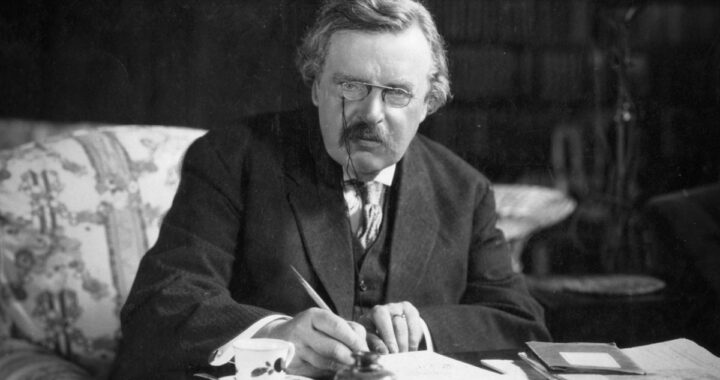
The Story Behind G.K. Chesterton’s Lost Manuscript
by Dale Ahqluist
The Story Behind G.K. Chesterton’s Lost Manuscript is a story in itself, and the person best qualified to tell it is Dale Ahlquist, who is President of the G.K. Chesterton society and is a world authority on the larger-than-life legend.
To find an unpublished G.K. Chesterton manuscript is something of a miracle. Chesterton, one of the most prolific writers of all time, seems to epitomize the kind of author with “never an unpublished thought.” He never wasted what he wrote. But that a known Chesterton manuscript should remain unpublished for so long is almost more of a miracle since there are entire magazines and scholarly journals devoted to the author, any of which should have by now seized on the previously unpublished “The Historical Detective Story.” But none of them did. It’s possible those editors didn’t know about it—which makes them not very good scholars. It’s more likely they didn’t know the story behind it, which makes them not very good detectives.
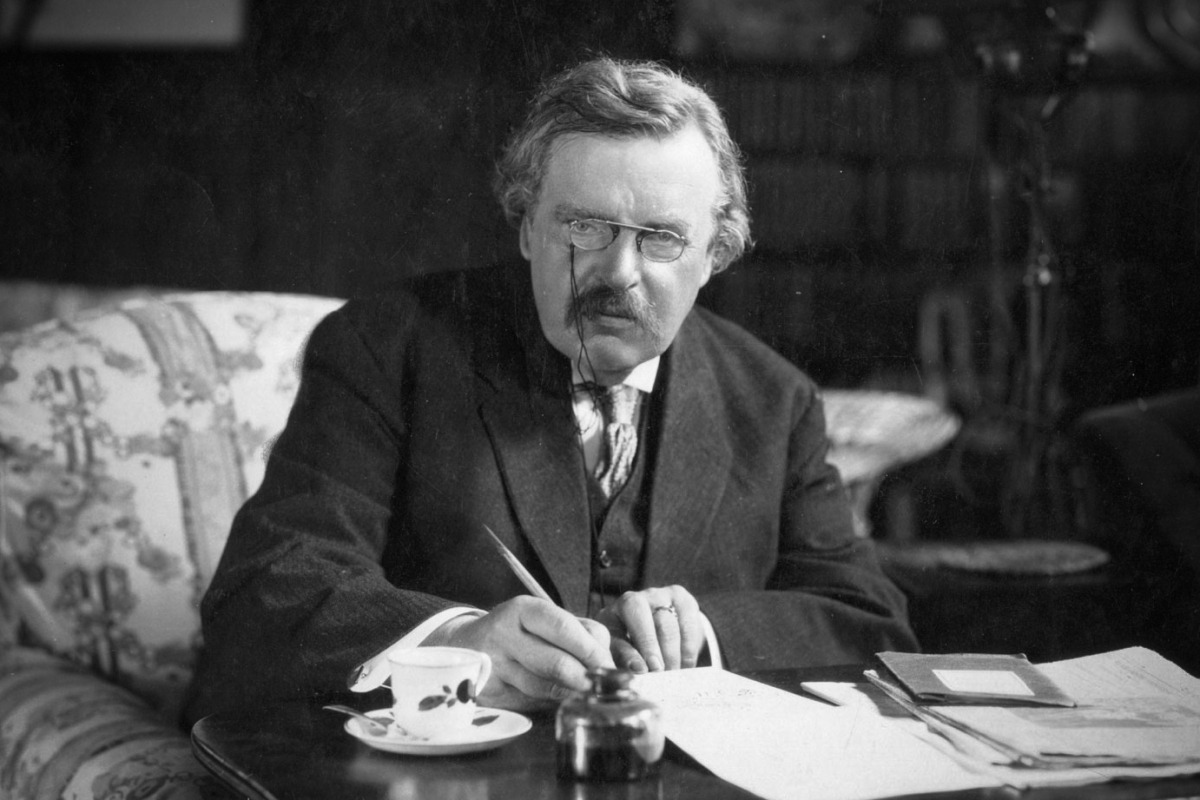
This manuscript has been sitting in the Rare Books and Special Collections of the Hesburgh Library at the University of Notre Dame for decades. There is an irony to that. The late Ralph McInerny, a successful author of detective fiction, was also a philosophy professor at Notre Dame, and his most famous series featured a priest-sleuth named Father Dowling—an obvious homage to Chesterton’s immortal Father Brown. However, McInerny also penned a series of mystery novels in which the main character, Roger Knight, is—you guessed it—a professor at Notre Dame who also happens to be an amateur detective. One of those novels, cleverly titled Irish Tenure, involves the discovery of a Chesterton manuscript— a lost Father Brown story—that, according to the novel, he wrote while a guest lecturer at the renowned university in 1930.
(Chesterton did visit as a guest lecturer that year).
While the real Chesterton manuscript, published here for the first time in The Strand, was also found in a box in Notre Dame, unlike the manuscript in McInerny’s novel, it isn’t a Father Brown mystery—but it is about mystery. There is also, incidentally, a copy of this manuscript in Chesterton’s papers at the British Library, along with a note from Chesterton’s secretary, Dorothy Collins, stating that the original had been sent to “The Detective Club Magazine.” The mystery is that no such magazine ever existed.
What did exist was the Detection Club. The Detection Club was a “secret society” of mystery writers gathered by Anthony Berkeley, who met regularly in a private room at L’Escargot, the famed restaurant in London’s Soho district. The founding members included such legendary figures as Agatha Christie, Ronald Knox, Dorothy L. Sayers, and A.A. Milne of Winnie the Pooh fame. They represented what was, more or less, the Mystery Writers Guild and unanimously elected Chesterton as their first president. They took their craft— but not themselves—seriously. Hence, such ceremonies as an oath before a human skull about not cheating on the clues and the solutions. (e.g., “No identical twins.”) They also wrote books together.
Isn’t it thrilling to imagine how all these giants played together in their craft, including collaborating on mystery novels, each contributing a chapter with someone providing a solution that may or may not have been what the others had in mind?
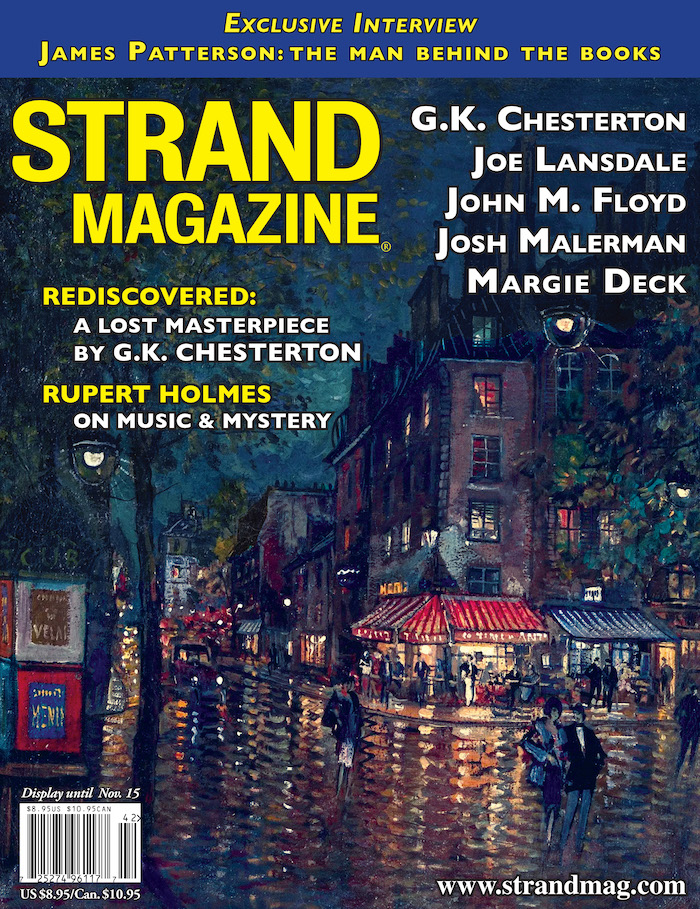
In any case, it is apparent that the Detection Club intended to start publishing a magazine. This would have had a ready appeal to the reading public and been a natural vehicle for the members to peddle their stories. If the club had planned such a magazine, they would certainly have tapped G.K. Chesterton to write a piece for the inaugural issue, which explains why Chesterton refers in this essay to “this most epoch-making and important periodical.”
So, the original manuscript was sent to a magazine that never existed. But how did it end up in the Special Collections at Notre Dame? Another mystery. There is no provenance for the manuscript, but there is no question that it is authentic. Besides the fact that it is written in Chesterton’s unmistakable style, his distinctive handwriting and signature are on the typescript. Obviously, Dorothy Collins sent it somewhere. She probably meant “Detection Club” in her note but wrote “Detective Club.” Some member of the Detection Club or hired editor received it, but since the magazine never materialized, whoever held the manuscript continued to hold it, and it remained in that person’s papers until it didn’t. After Chesterton’s death, it was either sold or given away or went into an estate through which it was acquired. Collectors acquire things. Then, either before they die or after they die, their collections get donated. At some point, it was donated to Notre Dame. A real detective (unlike me, who enjoys a good mystery unless it involves actual work and, as Chesterton says here, “I will fall back into the refuge of the incompetent.”) would track all this down. I said, “detective.” I could have said “scholar.” A real scholar is also a detective.
So, what is this essay about? In “The Historical Detective Story,” Chesterton discusses one of the first laws of
the detective story—providing a corpse at the beginning—as well as all the other tropes of the genre, and then goes on to agree with critics of the genre who decry what they see as its “staleness.” Why, asks Chesterton, shouldn’t today’s writers turn their attention to the historical mystery? He offers as an example changing the setting of E.C. Bentley’s Trent’s Last Case to the Elizabethan age, making the argument that the unfamiliar would give writers and their detectives a much-needed change of scene. Then he lays down a challenge to the Detection Club to take on one of the episodes that the history books have not solved—the death of Sir Edmund Berry Godfrey, for example—and collaborate on a mystery. Unfortunately, it’s unlikely that any of Chesterton’s fellow Detection Club members ever read this essay; the magazine they had planned to publish never panned out, and neither did the book.
Who was Sir Edmund Berry Godfrey? Well, look him up. And write the story that hasn’t been written.
The Story Behind G.K. Chesterton’s Lost Manuscript was written by Dale Ahlquist, a prominent author, speaker, and scholar recognized as an expert on G.K. Chesterton, the influential writer and philosopher. As the president of the American Chesterton Society, Ahlquist has dedicated his career to promoting Chesterton’s work and ideas, exploring their relevance in today’s world. His engaging style and insightful analysis have made him a key figure in Chesterton studies, inspiring audiences with the wit and wisdom of this literary giant. Through his writings and lectures, Ahlquist continues to illuminate Chesterton’s contributions to philosophy, theology, and literature, inviting others to discover the joy and depth of his legacy.
If you enjoyed The Story Behind G.K. Chesterton’s Lost Manuscript, Click here for more blog posts!