


5 Tips for Writing About Animals in Suspense
Check out these 5 Tips for Writing About Animals in Suspense!
By Midge Raymond
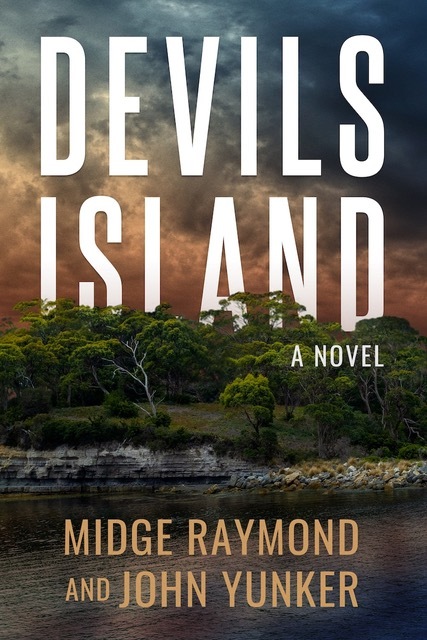
When John Yunker and I teamed up to write Devils Island, we knew we wanted Tasmanian devils to be major characters in the novel — yet we also knew we had to tread carefully. We wanted to be sure that we realistically portrayed this endangered species while also letting our imaginations go wild to give them a role in the story.
As instructors for the class Writing for Animals, we’ve spent a lot of time reading, writing, and talking about how to portray animals in fiction with empathy and authenticity. Without giving away any spoilers, I’ll say that the devils in Devils Island provide a purely fictional twist — but in the end, we worked hard to ensure that readers come away with an appreciation for these beautiful, misunderstood, endangered creatures.
Whether you’re writing a cozy featuring cats or a hard-boiled thriller featuring police dogs, you’ll want to take care to portray animals as characters and not merely props. This will not only bring your story to the next level; it will allow readers one more (nonhuman) character to love (or to suspect). Here are five tips for successfully bringing animals into your suspense fiction.
1. Do your research
The best way to create good characters is to know them inside and out — and this is even truer for nonhuman characters, which require quite a bit more research since we speak such different languages. For Devils Island, we visited an animal sanctuary in Tasmania, where we got to talk with staff and also meet a few devils in person. Even if you can’t travel to see a species firsthand, do go beyond reading about them. Watch videos so you can hear them and see how they move. Talk to wildlife experts or rescuers who know the animal. Even if you’re writing about an animal as familiar as your family dog, spend some time truly paying attention to their characteristics.
2. Fully develop your animal characters
Like human characters, animal characters should have names. This is obvious for companion animals like dogs and cats — but I think even wild animals should have names, especially if they have a large role in the story. In Devils Island, the Tasmanian devil known as Boomer is a vital nonhuman character who sets a human character, Kerry, on a path she didn’t expect.
Also, be sure to use proper pronouns for animals rather than using the word it. Again, for companion animals, this is easier than for wildlife; we see them as family, and we know their gender. Yet there are ways to make pronouns work for wild animals as well. If you’re writing about an entire species, highlight one individual to reveal characteristics of the species. And when it comes to using the right pronoun, it helps to have an expert on this species in your story. In the case of Tasmanian devils in Devils Island, Kerry shares the story of Boomer, who gives a face to all devils, and because she’s a naturalist who knows that female devils are smaller than males, she can easily use the right pronoun.
And as with all human characters, your nonhuman characters should be fully developed as unique beings. In Kathleen Donnelly’s novels, Forest Service officer Maya Thompson’s canine partner, Juniper, has a strong personality, varying moods, and vivid expressions — just like her human counterpart.
3. Incorporate setting and behavior
Many animals are endemic to their habitat (like the Tassie devils of Australia), but even if this isn’t the case, the setting is incredibly important when it comes to animals — as is behavior (which is why research is so important). Whether you’re writing about a beloved housecat or a bird of prey in the desert, be sure to include details of that setting: the sights and sounds, the smells and tastes, and how that animal interacts with their environment. Ask yourself: What in the animals’ environment makes them nervous, and what gives them comfort? For example, Donnelly’s Juniper, like most Malinois, is happiest when working, using her brain, and being incredibly active.
In The Cat Who novels, Lilian Jackson Braun captures the catness of Koko and Yum Yum perfectly by highlighting their curiosity, their love of food and naps, and their sly (and sometimes not so sly) ways of getting what they want. Even Koko’s preternatural intuition is woven into otherwise catlike behavior, making the stories both believable and endearing.
4. Create Conflict
All good stories depend on conflict, and it’s no different when animals are involved. Whether your goal is to highlight a certain species or simply weave in an animal character, conflict is needed to propel a story forward.
In Devils Island, readers will see the conflict between humans and animals woven into the story, from how the Tasmanian devils got their name from the 19th-century European explorers who were afraid of them due to their otherworldly yowls (devils are actually quite adorable) to the contemporary problem of habitat loss, rescue work, and poaching and wildlife trafficking in Tasmania. There’s also plenty of conflict between the characters themselves; many who work in rescue feel as though they’re living in a different world than those who don’t understand how high the stakes are. Devils Island’s naturalist-turned-guide, Kerry — a character who is broken by her rescue work and then has to deal with a missing hiker, cranky travelers, and a storm that cuts her off from civilization — reveals the challenges of rescue work while eventually, during this disastrous glamping trip, finding her strength again.
5. Choose point of view carefully
Writing from an animal’s POV is always tricky. If you’re writing mysteries for a younger audience, it’s easier because kids are open to talking animal characters. We adult readers usually have to suspend our disbelief to embrace a talking animal, so proceed with caution.
One way to do this is to manage reader expectations. In Rita Mae Brown’s Mrs. Murphy mysteries, the cats and dogs talk amongst themselves — and the fact that the books are co-authored by Brown’s own rescue cat, Sneaky Pie Brown, sets the tone for talking animals from the beginning.
And if your animals do talk, be sure you know the animal well, and take care to make sure you don’t dumb down your language in translation. Nonhuman animals are no less smart than we are, even if humans sometimes believe this because we don’t speak their language. In Brown’s books, for example, the talking cats reveal their natural cattitude, making their voices credible for readers who are owned by cats. In Edwin Hill’s thriller Who to Believe, which has a surprise chapter from a nonhuman POV, this section is not only well written but makes sense, reflects the animal’s character, and is extremely satisfying.
The magic of finding animals in stories is alive and well in suspense, and this not only allows us writers to highlight endangered species or bring companion animals to our writing, but it also enriches readers’ experiences as well, whether the animals are new or familiar.
Midge Raymond is the author of the novels Floreana and My Last Continent, the award-winning short-story collection Forgetting English, and, with John Yunker, the suspense novel Devils Island. She earned a certificate in private investigation from the University of Washington.
Click here for more blog posts!